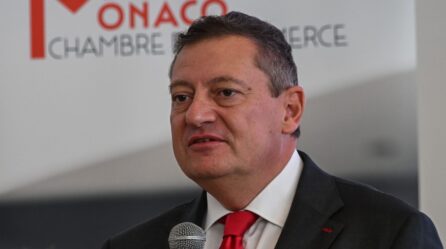
On the occasion of the 2026 Blue Economy & Finance Forum (BEFF), Céline Lapaian, Secretary General of CFM Indosuez, reflects on the key takeaways from this year’s event, which was marked by the rise of blue finance. Between the growing mobilization of private capital, the emergence of investment solutions dedicated to the ocean, and the necessary cooperation between public and private actors, she highlights the growing role that finance can play in preserving marine ecosystems and developing a sustainable economy.
What struck me this year was the paradigm shift: we are no longer at the stage of asking whether the blue economy is investable. We now have proof that solutions exist and that they work. The “blue finance” market is taking shape, with growing mobilization of private capital that must continue to strengthen and accelerate in light of the needs. The announcement by Amundi and Crédit Agricole of a dedicated business line for natural capital is a concrete example: the aim is to value natural capital—such as water and biodiversity—within the economy, whether through new funds, structuring, support, or advisory services, and by offering nature-based solutions.
Absolutely, this view is widely shared. According to the OECD, the blue economy has doubled in real terms over the past 25 years, now exceeding $2.5 trillion, but investments dedicated to its preservation remain insufficient given the stakes. Today, the financial sector must move from words to action: there is an urgent need to massively redirect capital flows toward ocean protection. At the 2025 Forum, more than $25 billion in existing investments were identified, and new financial commitments totaling €8.7 billion were made. But there is still much to be done.
It’s obvious: cross-sector collaboration is the key. Bringing together scientists, investors, public institutions, and businesses allows us to combine expertise and build innovative, measurable solutions. This is how initiatives like “green corridors” between ports or hybrid financial mechanisms emerge—combining environmental impact with economic viability. This collective approach is essential to accelerating the transformation of the blue economy and enabling us to effectively address the challenges we face.
The lively discussions during this second edition of the BEFF with a majority of private-sector stakeholders showed that investment opportunities are diverse, ranging from the financing of sustainable port infrastructure to the development of marine renewable energy, the promotion of marine biodiversity through thematic funds, and even support for innovative startups in sustainable fishing and responsible aquaculture.
Since our participation in the first edition of the BEFF last year, the Crédit Agricole Group, Crédit Agricole CIB, and CFM Indosuez have been working to strengthen our efforts in this area. This involves developing investment solutions dedicated to the blue economy, such as blue bonds, raising our clients’ awareness of these issues through socially responsible products[i], establishing partnerships with local organizations like the Oceanographic Institute, and the Indosuez Group’s support for the Index Blue Tech program, which supports the most innovative startups in the maritime economy in mainland France and overseas territories.
Finally, as an official partner, we offer our clients privileged access to the BEFF and Monaco Blue Initiative events, so they can get directly involved in this promising initiative.
[i] Socially responsible investment product: The principle of a socially responsible investment product (known as a “socially responsible product”) is to combine a financial performance objective with a social component, whereby a portion of the commission is donated to organizations such as associations or foundations to support projects and initiatives with a significant environmental or societal impact. A socially responsible product thus allows us to involve our clients and partners in a meaningful initiative.