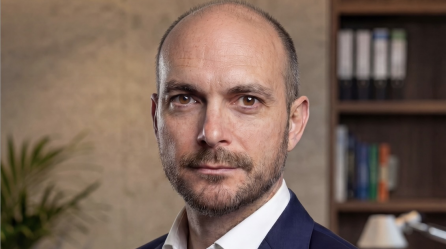
Interview with Antonio Mazzarella, Co-Founder & CIO of Mirazur Capital
The European private equity market is entering a new phase. After several years of abundance and high valuations, investors are returning to more disciplined fundamentals: increased selectivity, more prudent financial structuring and operational value creation. Antonio Mazzarella, co-founder and CIO of Mirazur Capital, analyses the major trends that are currently reshaping the private equity ecosystem in Europe.
The key signal I see is that of a market undergoing a demanding normalisation phase. We are emerging from a cycle of abundance characterised by high valuations and highly liquid financing. Today, private equity players in Europe are returning to more disciplined fundamentals: greater selectivity, more prudent financial structuring and a focus on operational value creation.
We are also seeing a rise in specialised sector strategies, particularly in the energy transition, healthcare and B2B technology, which reflects a search for resilience and sustainable growth rather than a simple financial arbitrage approach.
I would say it is a balance between caution and opportunism. Caution is clearly present: investors are taking more time in their decision-making processes, due diligence is more thorough and financing structures are more conservative.
But this caution does not preclude confidence. On the contrary, many see the current environment as a window of opportunity. Valuation adjustments are bringing prices back to more rational entry levels. The best-capitalised and best-structured players are actively positioning themselves to capture this new phase of the cycle.
Three major concerns stand out: Added to this are high expectations around ESG criteria, which are now fully integrated into investment and reporting processes.
It is more of a structural acceleration than a mere fad. The opening up of private equity to private wealth is a response to a profound change: portfolio diversification, the search for uncorrelated returns and the development of structures more suited to private investors.
This movement is gradually transforming the ecosystem: more accessible products, semi-liquid vehicles, increased education. This is not a sudden paradigm shift, but rather a lasting change that broadens the investor base and alters the dynamics of fundraising.
Monaco is no longer perceived as an emerging market, but as an established player with a specific identity. The Principality benefits from a solid wealth management ecosystem, recognised regulatory stability and an ability to attract international investors.
The quality of the investors (LPs) who have moved to the Principality in recent years has been incredible.