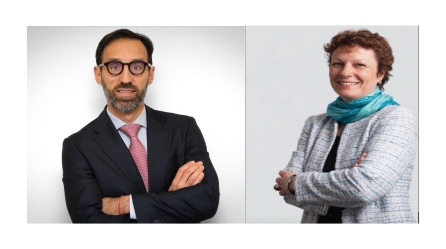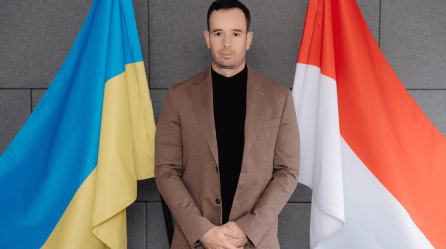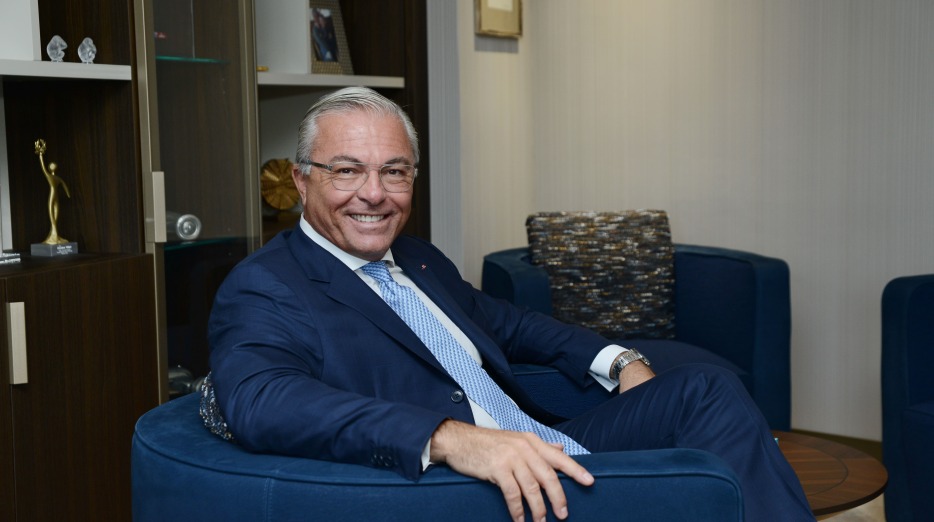
On the occasion of the Italy-Monaco Business Forum held in the Principality on March 13, opened by . H.S. Prince Albert II of Monaco, and in the presence of the Italian Ambassador H.E. Manuela Ruosi, we spoke with Francesco Grosoli, CEO of CMB Monaco, to discuss the significance of this event and the opportunities it presents for cooperation and economic development in a changing international environment.
Monaco offers something valuable and increasingly rare: stability. For an Italian executive considering an overseas acquisition, the restructuring of a holding company, or geographic diversification, being able to rely on a stable framework is no small matter;
it is a prerequisite for success. The Grimaldi family has been in power in Monaco since 1297—this is exceptional and clearly illustrates what Monaco offers in concrete terms: the ability to structure complex decisions without being subject to the political upheavals that disrupt other jurisdictions.
Yes, definitely, and this trend is accelerating. What I’m seeing on the ground is a two-pronged trend: Italian entrepreneurs seeking to secure what they’ve built, and business leaders in an active growth phase who want a solid foundation from which to roll out their international strategy. The most active sectors? High-end manufacturing, real estate, and everything related to family businesses in transition or expansion. Monaco isn’t a market for volume; it’s a market for quality, where people come with serious projects and long-term horizons.
What sets Monaco apart is not only the technical quality of its players—which is high and certainly continues to grow—but the density and quality of interactions. Here, a business leader can, in a single day, speak with their banker, their lawyer, a potential partner for a future project, and run into a fund manager. This proximity creates a fluidity in decision-making that is not found in major financial centers where everything is compartmentalized. For an Italian company expanding internationally, the challenges are rarely purely financial: there’s governance, family, personal taxation, and succession issues. Here, we consider all of that together, not in silos.
The demand comes mainly from mid-sized Italian family businesses, often very strong in their domestic market and embarking on a new phase of development. The typical profile I encounter is an entrepreneur at the helm of a family business that has performed well in Italy and is now grappling with major strategic questions: how to continue growing without losing control or diluting the company’s identity?
How to prepare for succession? These are people who, quite rightly, reject “off-the-shelf” solutions and expect a banker to understand their business and their values before discussing products with them.
Financial structuring needs are becoming increasingly sophisticated. Italian family-owned businesses face several challenges simultaneously: organizing generational succession, financing external growth, and sometimes partially opening up their capital, all while preserving their identity and control. This requires tailored solutions capable of reconciling economic requirements, family dynamics, and strategic vision. There is a growing demand for flexible, scalable structures that allow companies to anticipate rather than merely endure transitions. These challenges require integrated solutions that combine legal expertise, finance, and an understanding of family dynamics. It is precisely in this area that Monaco excels, and where we, as a private bank, have a central role to play.