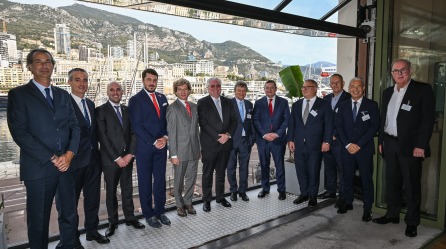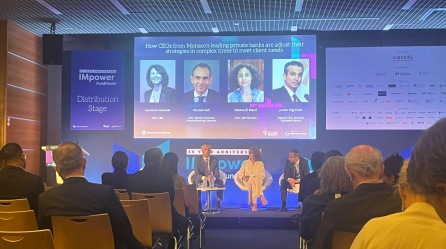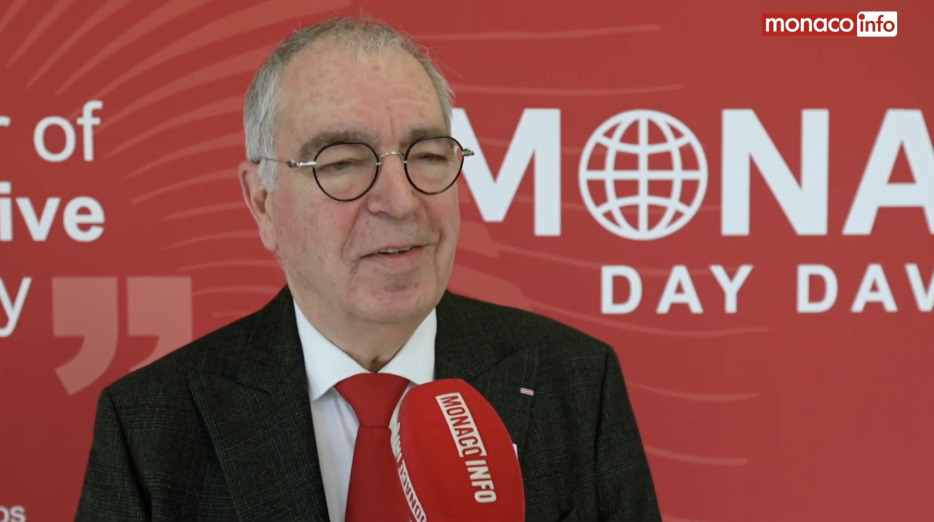
During Monaco Day Davos, held at Monaco House on the sidelines of the World Economic Forum, the Principality reaffirmed its unique position on the international economic stage. During this strategic day, Robert Laure, President of the Monegasque Association of Financial Activities (AMAF), highlighted the structural advantages of Monaco’s financial centre, its economic weight and its ability to remain a sustainable player in a changing world.
Davos is a unique gathering place for public, economic and financial decision-makers from around the world. Monaco Day, organised by the Prince’s Government’s Attractiveness Unit, provides an ideal platform for explaining the Monegasque model, beyond preconceived ideas. AMAF’s presence had the clear objective of representing the Monegasque financial centre, which plays a major economic role for the Principality.
The financial centre accounts for nearly 19% of Monaco’s GDP, with approximately €180 billion in financial assets (AUM) deposited in the Principality’s banks. These figures are sufficient to demonstrate that Monaco is a fully-fledged, structured, regulated and recognised financial centre. Our role, as the AMAF, is to support institutions, promote this reality internationally and ensure full compliance with the most demanding standards.
Of course, and there are many.
· Firstly, Monaco has the regulatory framework of the European Union for banking activities, offering a high level of legal certainty for clients, institutions and the Monegasque State alike.
· Secondly, in Monaco, the activities of management companies are separate from the custody of assets, which must be provided by a custodian bank in Monaco or abroad, which is the only authorised entity.
This strict separation between management and custody enhances security, transparency and investor protection.
· The financial centre is distinguished by its high standards of training and certification, particularly on confidentiality issues, which are the subject of compulsory modules for all financial professionals in the centre.
· The quality of institutional dialogue is also one of the strengths highlighted in Davos. The relationship between private players, represented by the AMAF, and the Monegasque authorities is fluid, constant and constructive.
This ongoing dialogue makes it possible to anticipate regulatory changes, maintain a high level of compliance — particularly in the fight against money laundering — and ensure continuous adaptation to international standards.
· Finally, the quality of our technological infrastructure should be highlighted, as it is essential to any modern financial activity. Monaco was the first country to adopt 5G and benefits from secure high-speed broadband, thanks in particular to the Europe Indian Gateway submarine cable connecting Asia to Europe, for which Monaco is a strategic hub. This infrastructure guarantees the quality of service that is essential for international financial activities.
In Davos, we were able to demonstrate how Monaco is a stable state, capable of working over the long term. Its ancient but constantly evolving constitution makes it a modern, agile state, well-suited to contemporary challenges. This institutional stability is a key factor in its attractiveness, particularly for international investors and families.
The discussions were very fruitful; the speakers were outstanding and the exchanges were always ‘informative’.
Numerous registrations were recorded for Monaco Day, demonstrating the real interest in the Monegasque model.