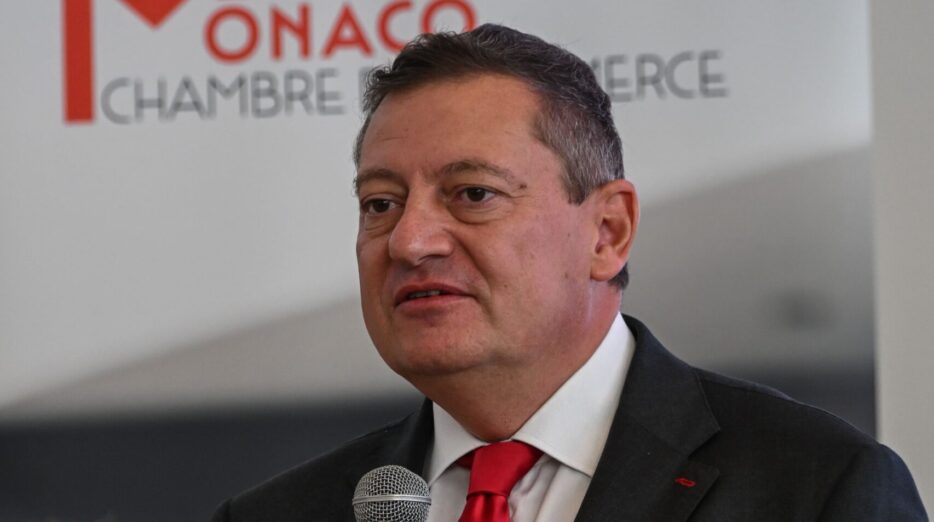
The Monaco Economic Board is becoming the Monaco Chamber of Commerce. More than just a name change, this development reflects a deliberate refocusing on the Principality’s businesses, their networking and their international development. Guillaume Rose, Chief Executive Officer, outlines this new roadmap.
It is both a continuation and a refocusing. Supporting businesses was already the core mission of the Monaco Economic Board; it now becomes our sole purpose. Our aim is therefore to go further in supporting Monegasque businesses and to strengthen the services we can provide them with.
This involves, in particular, developing our relationships with foreign chambers of commerce and major international networks of chambers of commerce. We have already begun to step up these efforts, notably with the Chambers of Commerce of Bordeaux and Corsica, and we intend to continue along this path.
We will also be setting up an economic intelligence unit. The idea is to use our market knowledge and understanding of international economic trends to provide businesses with information and opportunities that may be of interest to them.
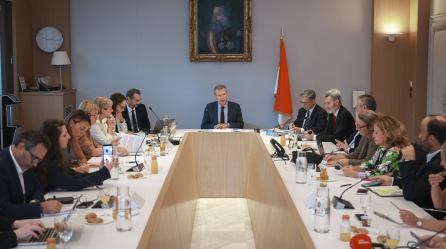
But a Chamber of Commerce is also, fundamentally, a place for networking. Our role is to host foreign delegations, to organise international business missions for Monegasque companies, and also to create more opportunities for Monegasque businesses to meet one another. We want to take this networking a step further by better identifying common interests and areas of complementarity.
This development is also part of a new division of roles within Monaco’s economic ecosystem. Invest Monaco is tasked with promoting Monaco’s image and appeal in order to attract new businesses to the Principality; our role is to take over from there for established businesses, to support them, to facilitate their interactions and to foster their development, particularly internationally.
Monaco’s primary strength is its cosmopolitan nature. The Principality is deeply international in terms of the composition of its population, its entrepreneurs and the networks they have established. It therefore has natural links not only across Europe, but also in Africa, Asia and the United States.
Added to this, of course, is the strength of the ‘Monaco’ brand. Around the world, the name immediately conjures up a very powerful image: exclusivity, luxury, motoring, high-end property and a certain art de vivre. This image represents considerable capital.
Our work consists precisely of building on this reputation whilst demonstrating that Monaco’s economic reality is not limited to this. Monaco is not just about luxury and glamour. It is also a hub from which international economic relations can be forged.
This was already one of the key objectives of the Monaco Economic Board and will remain at the heart of the Monaco Chamber of Commerce’s work: to capitalise on Monaco’s appeal to turn it into a catalyst for trade and economic development.
The question of measuring impact is a recurring debate for all chambers of commerce. Above all, we have an obligation of means, not of results. Our role is to open up markets, create opportunities and, above all, connect people: Monegasque businesses with one another, those in Monaco with foreign partners, or even foreign businesses with the Monegasque ecosystem when they come to the Principality.
It would therefore be unrealistic to claim that we can systematically measure the financial impact of each of our actions. Firstly, because these impacts often materialise over the long term. During a business mission, a company establishes contacts, discovers a market and begins to forge relationships. Any resulting contract, investment or establishment of a business presence may take place several months, or even several years, later. Secondly, Monegasque companies are under no obligation to share their commercial results with us. We naturally respect this confidentiality. Nevertheless, we know our members very well: we meet them at our meetings, conferences and various events. They regularly inform us of contracts or developments arising from the meetings we have helped to organise.
There is, however, one indicator that strikes me as particularly telling: companies keep coming back. When 18 companies choose to join us on a trip to China and 22 to Montenegro, it means they see a tangible benefit in these missions and the support we offer them. This loyalty is also a measure of our effectiveness.
The change is already noticeable and is very evident in certain sectors. In particular, we are seeing particularly strong growth in activities related to information and communication, which also account for a significant proportion of technology companies and start-ups.
Our membership figures are telling. In 2020, we had 48 members in the information and communication sector; by 2026, that number had risen to 66. This represents an increase of nearly 40 per cent over six years.
This trend reflects a genuine evolution in Monaco’s entrepreneurial landscape. New businesses are emerging, new types of entrepreneurs are setting up shop, and activities that previously played a more marginal role are gradually gaining in importance.
The traditional sectors naturally remain essential to the Principality’s economy. But at the same time, technology, information, communication and the media now constitute a particularly dynamic sector. It is within this environment that numerous start-ups are also flourishing.
For the Monaco Chamber of Commerce, this transformation is particularly interesting, as it also means adapting the support we provide. A chamber of commerce must reflect the economy it represents: it must support its established sectors whilst being able to identify and support those that are emerging.