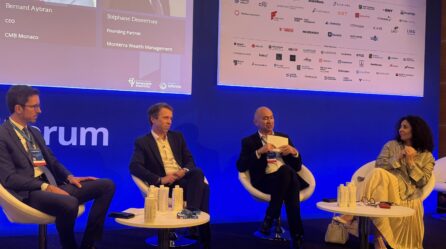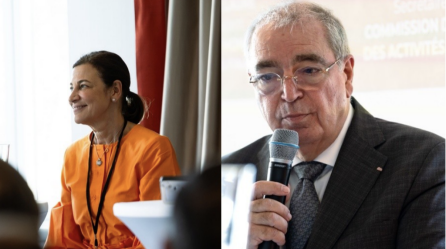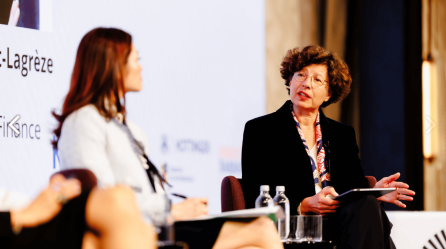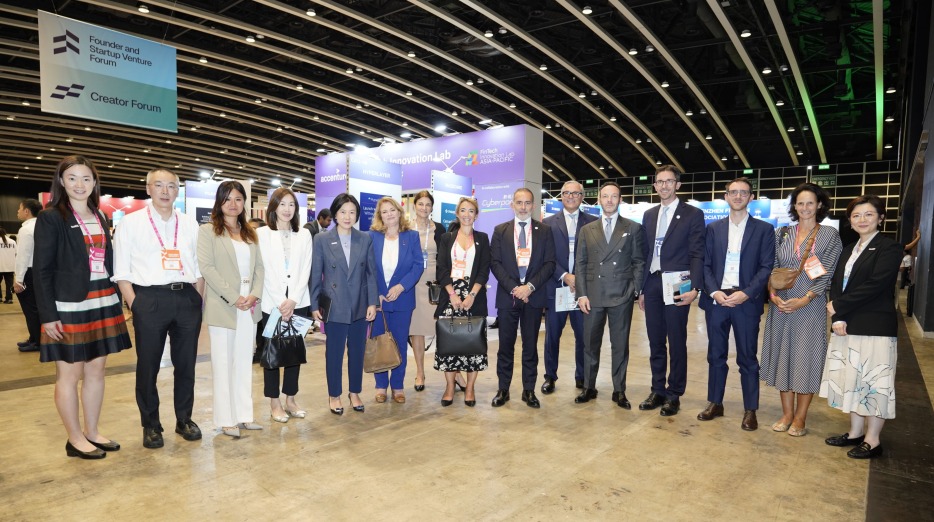
Although nearly 10,000 kilometres apart, Monaco and Hong Kong share the same mission: to attract, support and retain high-net-worth individuals from around the world. In early November, a Monegasque delegation visited the Asian metropolis to explore opportunities for cooperation between the two financial ecosystems. Amaury Chaboud, Secretary-General of the Monegasque Association of Financial Activities (AMAF), and Francesco Grosoli, Managing Director of the CMB Monaco,discuss the lessons learnt from this mission, the new expectations of Asian investors and the way in which the two markets complement one another.
Despite their differences in scale, the two territories share several key characteristics: a strong international outlook, an attractive tax regime, a concentration of financial expertise and the ability to attract the world’s wealthiest individuals.
Hong Kong has a population of 7.52 million and ranks among the world’s leading wealth management centres, with $2,950 billion in international assets under management according to 2026 figures from the Boston Consulting Group. Monaco, with a population of around 38,900, enjoys a very specific positioning, combining institutional stability, security, financial expertise and quality of life. The two centres therefore have complementary strengths to serve a discerning international clientele.
One of the key insights from this mission concerns the diversification of wealth. Discussions with Standard Chartered Private Bank, the Private Wealth Management Association and CICC International have, in particular, highlighted the new aspirations of the second generation of Asia’s wealthy families.
This generation is no longer seeking solely to diversify its financial investments. It is also interested in diversifying its places of residence and lifestyles. From this perspective, Monaco offers several advantages, notably its stability, security, international environment and the quality of its services. The conditions for settling and obtaining residency in the Principality have, moreover, attracted particular interest.
The meeting with the Securities and Futures Commission, Hong Kong’s financial markets regulator, revealed a convergence of regulatory concerns.
Three topics are currently at the forefront: artificial intelligence, operational resilience and cybersecurity. The Hong Kong authorities are seeking to balance a stringent regulatory framework with the need to preserve the attractiveness and innovative capacity of their financial centre.
These concerns largely mirror those of Monegasque institutions, which must also strike a balance between compliance, risk management and international competitiveness.
The PWMA shares several similarities with the AMAF. It represents its members’ interests before the authorities, monitors regulatory developments, and contributes to the training of professionals as well as to the development of its financial ecosystem.
These discussions have provided a better understanding of how it operates and helped to identify shared concerns. They could form a useful basis for developing a dialogue between the two associations, particularly regarding regulatory developments and changes within the wealth management sector.
Monaco occupies a unique position. The Principality combines recognised expertise in wealth management, political and economic stability, a high level of security and a particularly sought-after quality of life.
Meetings with CICC International and several Hong Kong-based institutions confirmed Asian investors’ interest in geographically diversifying their assets. In this context, Monaco can serve as a complementary destination to the major financial centres traditionally favoured, such as Singapore, Switzerland, the United States or Dubai.
The challenge lies in raising awareness of this value proposition and strengthening relations between professionals in both jurisdictions.
This mission has helped to better identify the expectations of Asian investors and to highlight the unique features of Monaco’s financial centre.
Discussions with Invest Hong Kong, the Financial Services and the Treasury Bureau, and wealth management stakeholders have opened up several avenues for cooperation, particularly in the areas of family offices, sustainable finance and the blue economy.
The next step is to build on these initial contacts and explore opportunities for long-term partnerships. Invest Monaco could, in particular, act as a facilitator in developing these relationships.
Monaco does not seek to compete with these centres on the basis of size, and that is precisely its strength. The Principality offers something that major financial centres struggle to provide: genuine proximity. In the Monegasque model, we know each of our clients, their history, their family and their plans. Added to this are institutional stability, a high level of security and a quality of life that matter greatly to families thinking for the long term.
These strengths alone are not enough, however. Our clientele is international and accustomed to the highest international standards. They are constantly comparing what they receive in Monaco with what they find in Geneva, London or Singapore. We must therefore constantly challenge ourselves to remain at the forefront and keep pace with best practice elsewhere. The areas for improvement are clear: the centre’s international visibility, the seamless nature of the client journey, the acceleration of digital transformation, and the ability to attract and retain the best talent. On this last point, a financial centre is only as good as its teams.
What struck me was the scale of the generational transition currently underway. Nearly 80,000 billion dollars will change hands worldwide within the next twenty years, and Asia is one of the main theatres of this shift. Heirs and new entrepreneurs no longer interact with their bank in the same way as their parents did. They expect responsiveness, high-performance digital tools, investment themes that reflect their values, and a holistic view of their wealth, which is often spread across several countries.
Monaco’s private banks can meet these needs through a comprehensive wealth and family-focused approach: support with wealth transfer, multi-jurisdictional structuring, family governance, and a dedicated point of contact who knows the whole family. For clients considering making Monaco their European base, we have a real opportunity to seize.
I found the quality of service particularly inspiring. In Hong Kong, technology is obviously very advanced. It is not merely a showcase: it is integrated into every stage of the client relationship, with a remarkable emphasis on speed and fluidity. Artificial intelligence is used there to anticipate needs, simplify processes and free up time for advisory services, within a framework where cyber security and operational resilience are handled with the utmost rigour. But behind these tools, above all, are men and women who are deeply committed, driven by a genuine culture of service. Their dedication is reflected in a sustained pace of work, remarkable productivity and constant attention to detail and to clients’ expectations. It is this combination of technological excellence and human excellence that makes all the difference.
The key lesson is that technology must serve the relationship, not replace it. This is the conviction that guides CMB Monaco: to be a ‘Human Digital Bank’, where people come first and technology supports them. The roll-out of our new core system, powered by BlackRock Aladdin, is part of this approach. Innovation is therefore not just a matter of tools. It also involves training teams, fostering a spirit of curiosity and ensuring that everyone shares a customer-focused mindset.
Firstly, I would like to commend Invest Monaco and the AMAF for organising this event in Hong Kong, which was of the very highest standard. The discussions were fruitful and particularly stimulating.
Lasting partnerships are built over time, and it would be premature to announce any at this stage. What is certain is that we have established a dialogue based on trust with leading players, which can be extended to cover specific areas, notably family offices and the support of families whose wealth and projects span Asia and Europe.
This mission is, above all, an exercise in openness and listening. It also enables us to gain a better understanding of the products, solutions and investment themes emerging in Asia, and to identify what might enhance the range of services we offer our clients. The cross-regional perspective is invaluable: it helps us to better understand their needs and, where appropriate, to broaden the scope of opportunities we can present to them.
For CMB Monaco, this mission reinforces our international outlook and directly informs our strategic roadmap. Our ambition is to prepare the bank for the next fifty years. This involves looking at best practice from around the world, so that we can continue to offer our clients services and products of the highest standard, whilst remaining firmly rooted as a bank founded in Monaco and dedicated to the Principality.