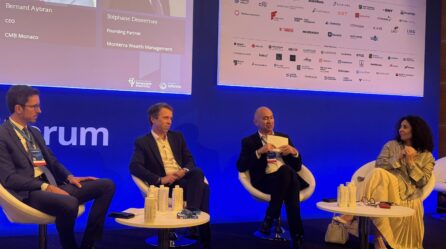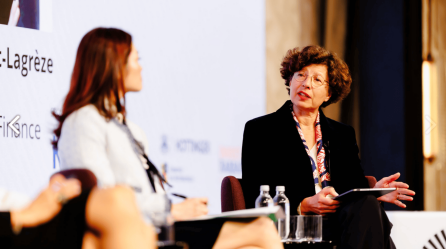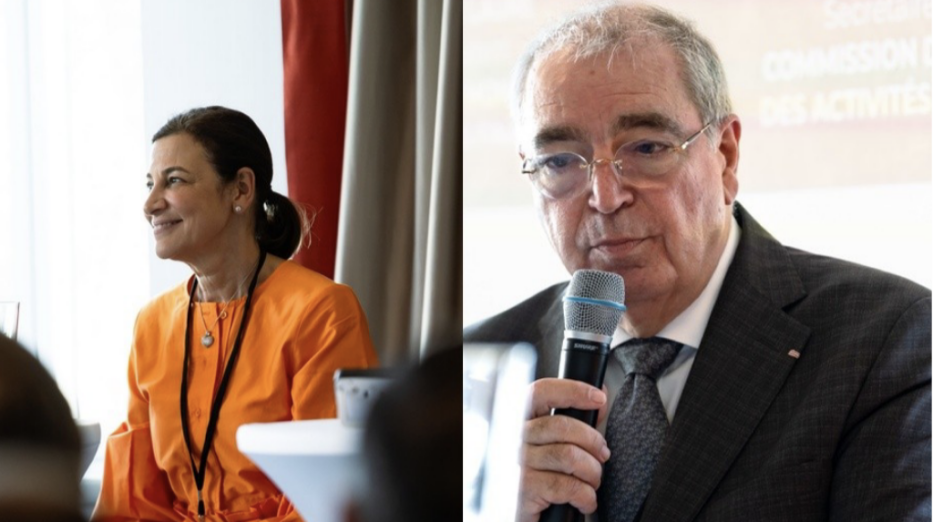
During the AGEFI Circles event, held at the Méridien Beach Plaza, Ludivine Garnaud, events editor-in-chief at AGEFI, interviewed Robert Laure, president of the Monegasque Association of Financial Activities (AMAF), and Magali Vercesi, secretary general of the Financial Activities Control Commission (CCAF). Speaking before financial center professionals, one of Monaco’s key distinguishing features was highlighted: close cooperation between authorities and private-sector players, which has enabled the Principality to successfully navigate the various stages of its adaptation to international standards.
Robert Laure:
It is important to emphasize just how exceptional the period we have just gone through has been, given the scale of the work accomplished. The authorities, the Government, the National Council, the independent administrative authorities, and industry professionals have moved forward together. This collective effort has yielded results that have been commended by international bodies. At the previous FATF meeting, the progress made was acknowledged, One remaining area was administrative and criminal sanctions, which were still under specific review. This momentum perfectly illustrates Monaco’s ability to act quickly and collectively when the stakes are high.
Magali Vercesi:
The CCAF does not have direct jurisdiction over this matter, but we naturally participated in the overall effort through dialogue and cooperation with other authorities. More broadly, we are seeing a strong trend toward enhanced cooperation among regulators, both nationally and internationally. Cooperation agreements are on the rise and are facilitating a better flow of information. This ability to work together is a fundamental element of the effectiveness of supervisory mechanisms.
Robert Laure:
The AMAF brings together all banks and asset management companies authorized by the CCAF. This representativeness is a particular strength, as all market participants are united within a single professional organization. Our mission is, of course, to represent our members’ interests and to be involved in regulatory and legislative developments. We actively participate in discussions regarding legislation and reforms affecting the financial center.
But AMAF also plays a broader role: that of a unifying force. We place great importance on exchanges between institutions. In an environment where everyone is absorbed by their own constraints, it is essential to build connections, foster meetings, and facilitate the sharing of experiences. This human dimension helps enrich discussions and strengthens the cohesion of the entire sector.
Magali Vercesi:
Yes. In 2025, six new institutions were accredited. Notably, they have diverse profiles. Some specialize in traditional discretionary management, while others are involved in the management of foreign funds—an activity that has seen significant growth over the past two years. This diversification is particularly interesting because it enriches Monaco’s financial ecosystem and fosters the exchange of different practices and experiences.
Robert Laure:
This diversity is a true asset. The more varied the profiles, the more fruitful the exchanges between professionals. It is also an additional factor in Monaco’s appeal.
Magali Vercesi:
It would be unrealistic to ignore their growth. European regulations already exist, and Monaco is working to adapt its legal framework. The goal is not to remain on the sidelines of these developments but, on the contrary, to regulate these activities in accordance with international standards.
Robert Laure:
Monaco has, in fact, been a pioneer in several areas. But the Principality is part of a broader European environment, and legislative and regulatory developments must naturally be consistent with international frameworks.
Robert Laure:
Very clearly. Financial institutions are now incorporating these dimensions into their analysis processes and investment policies. Environmental criteria are gradually influencing credit granting mechanisms and risk assessment models. The blue economy, long championed by H.S.H. Prince Albert II, is no longer merely a philanthropic endeavor. It is now part of a sustainable economic framework. We are seeing more and more stakeholders taking an interest in these issues. While some trends may come and go, the fundamental transformation is very real.
Magali Vercesi:
Absolutely. Membership in international organizations and the cooperation agreements we sign enhance the Principality’s visibility and enable the CCAF to participate in international discussions. This recognition also facilitates exchanges with other supervisory authorities and contributes to Monaco’s integration into global standards. For international institutions wishing to establish a presence here, knowing that their local regulator can communicate effectively with their home supervisors is a key factor in building trust.
Magali Vercesi:
We are currently working on improving our tools and databases to streamline communication with authorized institutions. A dedicated platform is also in the works. Artificial intelligence opens up extremely interesting possibilities. It will accelerate data processing, enhance analytical capabilities, and improve the quality of oversight through more responsive and real-time supervision.
Robert Laure:
The immediate goal is, of course, to support the authorities in the next international steps. But being removed from the lists is not an end in itself. The real challenge is to ensure that all the progress made is sustained over the long term. We must maintain the high standards we’ve achieved and continue our efforts. The next step will be preparing the new National Risk Assessment, which will once again mobilize all public and private stakeholders. Compliance is an ongoing process. Once one objective is achieved, we must already begin preparing for the next one.
Magali Vercesi:
Our ambition is to remain a hands-on regulator, attentive to the needs of financial institutions. Monaco’s size offers a unique capacity for adaptation and agility. Regulations must naturally meet international standards, but they must also be consistent with the economic realities of the Principality. Ongoing dialogue with the AMAF is essential in this regard. This organization represents all stakeholders in the financial center and serves as a highly effective partner.
Robert Laure:
The AMAF is, above all, made up of professionals who, through committees and working groups, dedicate their time to the collective interest. This is often a behind-the-scenes effort, but one that is absolutely fundamental. The quality of the dialogue between the authorities, the regulator, and financial institutions is one of Monaco’s greatest strengths.
Beyond regulatory, technological, or international issues, the discussions organized as part of the AGEFI Circles have above all highlighted what makes Monaco’s financial center unique today: close cooperation between the public and private sectors, recognized technical expertise, the ability to adapt quickly, and institutional stability—all of which continue to fuel its competitiveness.
For both Robert Laure and Magali Vercesi, these strengths are the best guarantees of the financial center’s future development and its appeal to major international players.