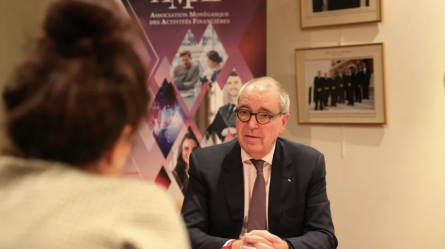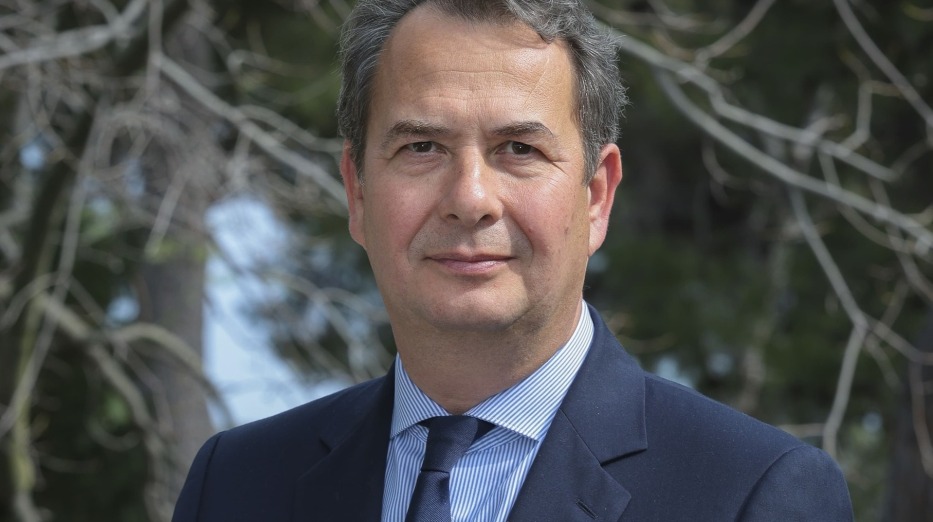
As Executive Coordinator of the Permanent Secretariat of the Coordination and Monitoring Committee for the National Strategy to Combat Money Laundering, Terrorist Financing, the Proliferation of Weapons of Mass Destruction, and Corruption, Frédéric Chartier discusses the organization of this interministerial framework, its missions, and the ongoing dialogue with the FATF and Moneyval as part of Monaco’s international monitoring process.
I hold a doctorate in law and was a member of the Paris Bar. I practiced in a corporate law firm before moving to Luxembourg for ten years, first as a lawyer, then within asset management companies of the Natixis group that later became independent, where I served notably as General Counsel and Compliance Officer. My career path gradually led me from business law to finance, and then to compliance roles, particularly in areas related to the fight against money laundering and terrorist financing.
I arrived in Monaco in 2017 as Head of Legal and Compliance at the Financial Activities Control Commission (CCAF), a role I held until 2024, before joining the Ministry of State to establish the Permanent Secretariat for AML/CFT.
The Coordination and Monitoring Committee for the National Strategy to Combat Money Laundering was already in place. It brings together representatives from some fifteen agencies and authorities, as well as representatives from institutions and the private sector, who play a role in combating money laundering and terrorist financing.
The national anti-money laundering framework thus involves numerous Monegasque agencies and authorities as well as the private sector. The success of this framework relies on genuine teamwork, which enables it to be updated and brought up to the highest international standards.
The creation of a permanent structure thus addressed the need to ensure continuous operational coordination with all relevant agencies, as was already the case elsewhere.
This organizational structure was decided upon before Monaco’s inclusion on the gray list in June 2024, but that deadline accelerated its implementation. The Permanent Secretariat is an interministerial unit reporting directly to the Minister of State. It is not intended to be dissolved after removal from the gray list.
The Permanent Secretariat currently consists of six people. They are primarily lawyers and specialists in compliance and anti-money laundering issues, as well as individuals capable of managing projects spanning several months and involving numerous government departments.
Some members have worked within national authorities or international organizations active in this field, notably with Moneyval or in Monegasque operational services. This diversity of experience ensures close technical coordination with all relevant stakeholders.
The Permanent Secretariat is primarily involved in preparing and organizing meetings of the National Coordination Committee. It drafts the agendas, prepares the relevant documentation, and follows up on the work decided upon in this context. It also organizes meetings of the operational committee, which allow for progress on technical issues with the relevant agencies.
It then ensures the day-to-day operational coordination of the national framework for combating money laundering and terrorist financing. In light of Monaco’s inclusion on the gray list in June 2024, it monitors the implementation of the Action Plan established with the FATF, communicates with the FATF and the relevant authorities, and works with them to prepare progress reports submitted regularly to the assessors.
The Permanent Secretariat also prepares the National Strategy and the triennial National Action Plans, which are submitted to the National Coordination Committee for approval. These documents are based in particular on the National Risk Assessments (NRAs), which the Secretariat also coordinates. A new National Risk Assessment is being conducted to take into account the observations made during the previous country assessment by MONEYVAL.
Furthermore, it participates in the review of the national legal framework in collaboration with the relevant agencies. This analysis may lead to proposals for regulatory changes, particularly to address FATF recommendations.
It also coordinates awareness-raising initiatives for regulated professions, notably through the organization of events, including recent ones focused on suspicious activity reports or financial investigations.
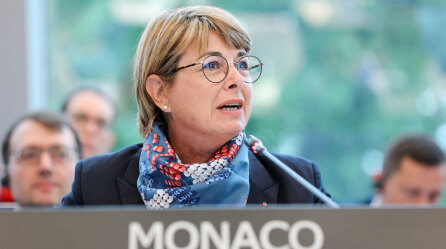
Finally, the Permanent Secretariat plays an important role internationally by following FATF recommendations, attending FATF and MONEYVAL plenary sessions alongside other representatives of Monegasque agencies and authorities, and engaging in regular exchanges with other countries.
Since Monaco’s inclusion on the grey list in June 2024, an Action Plan has been defined with the FATF. The Permanent Secretariat monitors its implementation and, together with the relevant agencies and authorities, prepares progress reports that are regularly submitted to FATF assessors, initially leading to written exchanges. In this same context, it organizes and participates in various in-person meetings held with FATF assessors and interacts regularly with the FATF Secretariat and the MONEYVAL Secretariat.
At the same time, Monaco continues its exchanges with Moneyval as part of the enhanced monitoring process initiated following the 2022 mutual evaluation. Following this work, fifteen technical criteria were re-evaluated favorably at the end of 2024, bringing the technical compliance score to 39 out of 40.
Monaco now systematically participates in the plenary meetings of the FATF and Moneyval, as well as in the associated working groups. This regular presence facilitates exchanges with foreign counterparts, including, for example, financial intelligence units, supervisors, coordinators, and law enforcement or judicial officials.
Monaco is also increasingly involved in discussions regarding the evolution of FATF recommendations and mutual evaluation reports of member states. Monaco’s recent hosting of an international training session for Moneyval evaluators, attended by some forty participants, is part of this momentum.
This active participation reflects a commitment recognized in international forums, where Monaco is regarded as a serious partner fully committed to implementing the recommendations.
The private sector is represented within the second college of the National Coordination Committee, which includes regulated professions such as financial institutions, notaries, bailiffs, real estate professionals, and jewelers.
Regular exchanges also take place outside this formal framework, particularly to assess the impact of Monaco’s inclusion on the gray list and to ensure a shared understanding of the identified risks.
Yes. The Permanent Secretariat was established as a permanent structure. This type of structure exists in many other countries. It will continue to coordinate the national risk assessment, the national strategy, and the review of the anti-money laundering framework, regardless of the timeline for removal from the gray list.
Its role is long-term, designed to ensure the continuity and consistency of the national framework for combating money laundering, terrorist financing, the proliferation of weapons of mass destruction, and corruption.