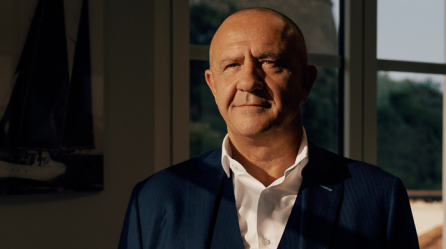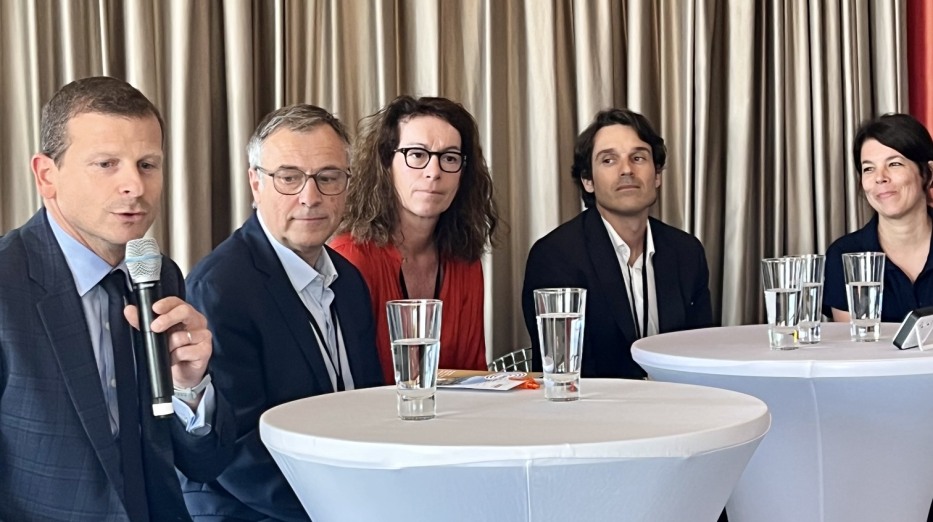
Moderated by Stéphanie Roy, a journalist at L’AGEFI, this roundtable discussion on structured products brought together Jérémy Bellaïche, Global Head of Structured Products atUBP SA, Marie-Hélène Royet, Portfolio Manager at Andbank Monaco,Stefano Torti, Head of Asset Management & Advisory at Moncrief Private Bank Monaco, as well as Dominique d’Arrentières, Business Solution Manager at ERI Bancaire Paris. The discussion highlighted the growing role these instruments play in private clients’ asset allocations. Contrary to common misconceptions, the panelists emphasized their role as genuine portfolio-building tools—provided they are fully understood and tailored to investors’ profiles.
Long considered complex products reserved for sophisticated clients, structured products have gradually established themselves as diversification tools in their own right. For Marie-Hélène Royet, their weight in portfolios varies greatly depending on investor profiles. Some investors never use them, while others allocate up to half of their financial assets to them. “Structured products are not core portfolio investments. They are a satellite solution that offers an asymmetric risk profile,” notes Stéfano Torti.
At Andbank, they generally account for between 5% and 15% of discretionary allocations, with no specific sales targets set. Everything depends on market conditions, available opportunities, and client needs. Stefano Torti shares this approach. For Moncrief Private Bank, structured products are first and foremost a management tool, not a standalone asset class.
As head of UBP’s structured products division, Jérémy Bellaïche emphasized the profound evolution of this investment category. “We do not view structured products as an asset class, but as a toolkit,” he explains. According to him, a structured product can be used as an alternative to bonds, stocks, or even certain alternative strategies. It all depends on its structure and the objectives being pursued. This flexibility explains the growing interest among investors. At UBP, some clients do not hold any structured products, while others build a large portion of their portfolios around these solutions. The UBP executive also points out that the industry has undergone profound changes since past crises. “There has been a veritable revolution in the way products are structured and presented,” he observes.
Investment banks now have sophisticated valuation tools at their disposal, secondary markets are more efficient, and specialized teams have significantly enhanced their expertise.
One of the main attractions of structured products lies in their ability to offer asymmetric return profiles. Marie-Hélène Royet emphasizes this essential aspect. Private investors appreciate the ability to know from the outset the various possible scenarios: potential return, level of protection, and risks involved. “ “The rules of the game are known from the start,” she emphasizes.
This visibility provides significant psychological comfort to certain clients, who prefer to have a clear framework rather than being fully exposed to market fluctuations. Stefano Torti also notes that this predictability is one of the major advantages of these solutions in more uncertain environments.
All panelists emphasized the need to clearly explain the mechanisms of structured products. For Marie-Hélène Royet, client education and support remain fundamental. “I would never offer a structured product based on an asset in which I wouldn’t want to invest directly,” she notes. Protective barriers must never obscure the various underlying risks. Market risk, issuer credit risk, liquidity risk, and secondary market risk must be fully understood.
Jérémy Bellaïche shares this conviction. In his view, there is no such thing as a one-size-fits-all product. The challenge lies in building solutions tailored to each investor’s profile and wealth management objectives. A product designed to serve as an alternative to cash will obviously have nothing in common with a more dynamic strategy using leverage or sophisticated mechanisms.
Marie-Hélène Royet placed particular emphasis on an aspect that is sometimes overlooked: credit risk. “ “My first criterion isn’t what a product yields, but who will repay it,” she summarizes. The holder of a structured product is, above all, a creditor of its issuer, Stéfano Torti points out. This reality leads Moncrief Private Bank to prioritize diversification across counterparties and to carefully analyze credit quality. The experience of the 2008 financial crisis has left a lasting impression on many Monegasque investors. The secondary market is also a key consideration. A counterparty capable of ensuring high-quality quotes throughout the product’s life cycle is a decisive factor for clients whose needs may change. “Very attractive returns should always prompt a certain degree of caution,” he adds.
Contrary to popular belief, Jérémy Bellaïche believes that young investors are becoming increasingly receptive to structured products. The teaching of these instruments in business schools and finance programs is contributing to their wider adoption. “Structured products are increasingly part of UBP’s DNA,” he emphasizes.
Improvements in valuation tools and the speed with which it is now possible to design customized solutions also meet the expectations of a clientele accustomed to immediacy.
Stefano Torti notes, however, that younger generations often remain more attracted to direct investments and prioritize liquidity.
Dominique d’Arrentières offered a more operational perspective by highlighting the progress made in technological infrastructure. Asset management firms now require much more precise monitoring of structured products throughout their lifecycle. Platforms must be able to automatically integrate product characteristics, track market events, and provide regular updates to clients. This demand for transparency also addresses growing regulatory requirements. Tools now make it possible to match product characteristics with investors’ risk profiles and continuously verify their suitability.
Stefano Torti points out that structured products are generally designed to be held until maturity or until early redemption. Investment decisions should not be dictated solely by the pursuit of returns. The quality of the issuer, diversification of counterparties, and consistency with the overall portfolio remain priorities. At Moncrief Private Bank, as at Andbank, the management of structured products is part of a holistic approach to wealth management. Finally, Jérémy Bellaïche emphasizes the importance of valuation tools and secondary markets, which now make it possible to support clients with greater flexibility.
At the conclusion of the discussions, a consensus emerged: structured products continue to gain prominence in private portfolios.
Thanks to their flexibility, the wide range of scenarios they enable, and the increasing quality of technological tools, they are now an essential component of many wealth management strategies. Provided, however, that they are used with discernment.
As Jérémy Bellaïche, Marie-Hélène Royet, and Stefano Torti pointed out, their effectiveness relies less on the pursuit of maximum returns than on their ability to provide a precise solution tailored to each investor’s objectives, with a focus on diversification, protection, and risk management.